 blog
blog
Buy Digital Mental Health Planner: 2026 Guide
Table of Contents
- What to Look for in a Digital Mental Health Planner
- Using a Digital Mental Health Journal for Daily Reflection
- Mental Health Habit Tracker: Building Sustainable Wellness Routines
- Self-Care Digital Planner Essentials for Busy Mothers
- Digital Planner for iPad: Flexibility and Portability
- How to Actually Stick With Your Digital Mental Health Planner
- Common Mistakes When Choosing a Digital Mental Health Planner
- Frequently Asked Questions
Last Updated: October 11, 2026
What to Look for in a Digital Mental Health Planner
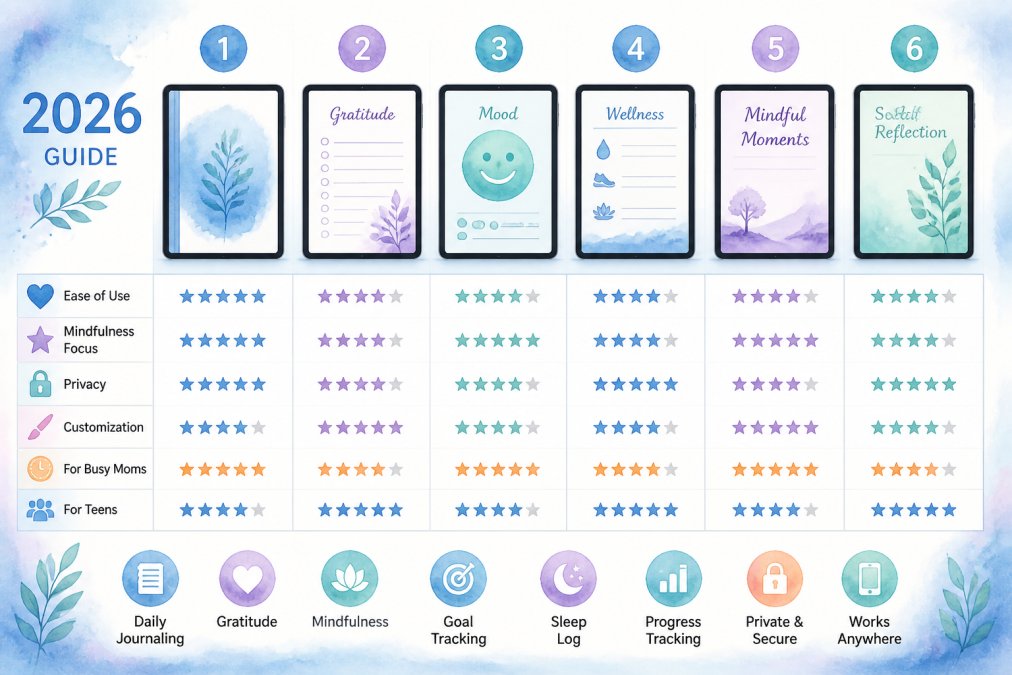
Choosing the right digital mental health planner can feel overwhelming when you're already stretched thin. A digital mental health planner designed specifically for busy mothers simplifies tracking habits, setting intentions, and building sustainable wellness routines without adding another time-consuming task. At SSBGMARKETINGINC., we understand that the best planner is one you'll actually use.
Time commitment and ease of use
The most important feature is how quickly you can get started and maintain momentum. Look for a digital mental health planner that requires minimal setup and delivers value within your first session. Many busy mothers report that planners requiring more than 10 minutes per day get abandoned. The ideal planner fits into existing routines: morning coffee, lunch break, or evening wind-down.
Ease of use also means intuitive navigation and clear prompts. If you're spending time figuring out where to click, you're losing the mental space wellness tools should create. Confirm the planner works on your devices and syncs seamlessly across them.
Features that match your priorities
Different planners emphasize different aspects of wellness: habit tracking, mood journaling, or goal setting. Identify which areas matter most to your mental health right now, establishing routines, building self-care habits, tracking emotional patterns, or supporting your teenage daughter's mindfulness.
The best digital mental health planner offers features aligned with your specific needs. Customizable reminders, template prompts, mood tracking with visual trends, and progress visualization help you stay engaged and transition from survival mode to intentional living.
Using a Digital Mental Health Journal for Daily Reflection
A digital mental health journal transforms scattered thoughts into meaningful insights about your emotional patterns. Unlike paper journals, it captures reflections in one searchable, organized space accessible anytime, anywhere.
Daily journaling doesn't require lengthy entries. Five to ten minutes of reflection creates clarity without demanding hours. Writing slows racing thoughts and helps you process stress and anxiety. Over time, patterns emerge: which situations trigger stress, which self-care practices help, and which habits support mental clarity.
The Clarity in 3 Steps approach integrates journaling into your existing routine by breaking it into three simple steps: reflect on your day, identify one insight, and set one intention for tomorrow.
Mental Health Habit Tracker: Building Sustainable Wellness Routines
A mental health habit tracker turns abstract wellness goals into concrete daily actions you can monitor and celebrate. Visual records of consistency reinforce behavior through dopamine release, making habits easier to sustain.
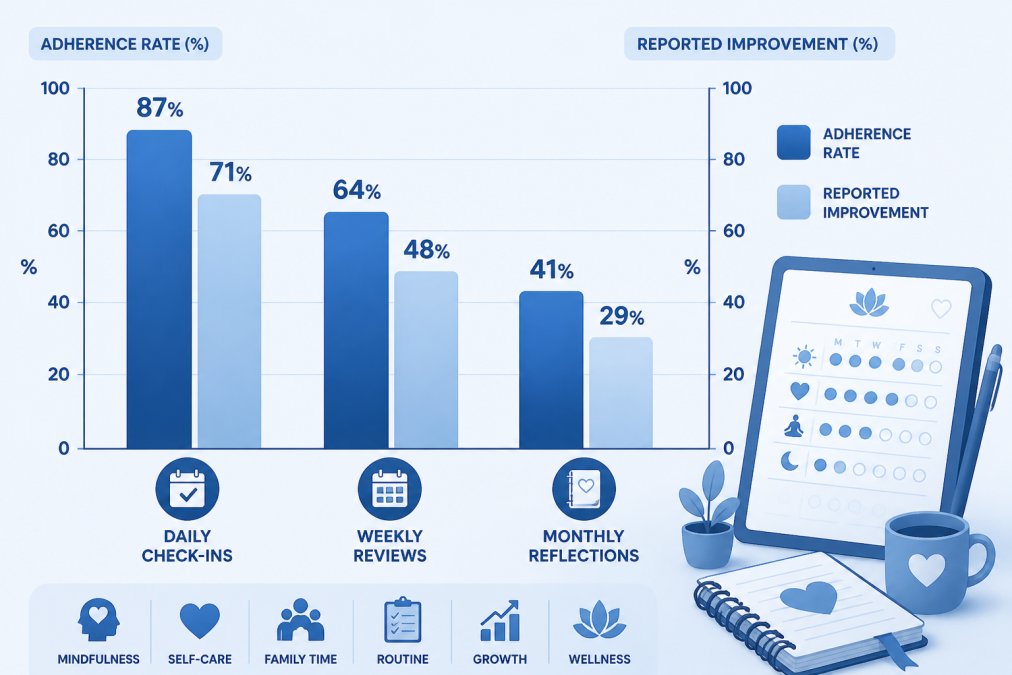
Effective habit trackers include streak counters, progress visualization, and gentle reminders without shame. If you miss a day, the tracker should encourage restart rather than penalize. Celebrate small wins, one meditation, enough water, five minutes of journaling, rather than demand perfection.
The habits you choose matter more than the number of habits you track. Start with 2-3 habits that directly support your mental health: perhaps morning gratitude, an evening wind-down routine, and one self-care practice. As these become automatic, you can add others. Sustainable wellness routines build gradually, not overnight.
Self-Care Digital Planner Essentials for Busy Mothers
A self-care digital planner makes self-care non-negotiable by scheduling, tracking, and reminding you it's essential, not selfish.
Essential features include time-blocking to schedule self-care, templates for common activities (baths, walks, creative projects), and tracking which practices restore your energy. Rating mood before and after self-care helps identify what works best for you.
The planner should also support intentional family moments, shared journaling prompts, guided breathing exercises, or wellness check-ins, that nurture connection while modeling healthy wellness habits.
Digital Planner for iPad: Flexibility and Portability
An iPad-based digital mental health planner combines the tactile satisfaction of handwriting with digital organization. Writing directly on your iPad feels closer to traditional journaling while keeping everything backed up and searchable.
Before purchasing, confirm these technical details:
File Format and Compatibility
Digital planners come in three formats: PDF-based (work on any device but offer limited interactivity), app-based (sync automatically across Apple devices but lock you into one ecosystem), or web-based (work on any device but require internet). Verify which format your planner uses.
Syncing and Cloud Storage
Confirm the planner supports cross-device syncing if you start entries on iPad and finish on phone. PDF planners require manual file management; native apps sync automatically. Ask the seller: Does syncing happen in real time? Is there a file size limit? Can you access entries offline?
Storage and Backup
Confirm whether the planner stores data locally (more private but vulnerable to loss) or in the cloud (accessible anywhere but dependent on company security). If cloud-based, ask: Where are servers located? Does the company encrypt data? Can you export your data if you cancel?
Stylus and Handwriting Recognition
If handwriting matters, test Apple Pencil support and whether the app responds smoothly without lag. Some planners convert handwriting to text for searchability; others keep it as images only.
Get the 3-step manifestation ebook now →
Offline Access and Airplane Mode
Verify the planner works without internet if you journal during commutes. Ask the developer: Can you access all past entries offline, or only recent ones?
Your digital planner for iPad travels with you, enabling capture of thoughts and reflection whenever the moment strikes. The larger screen makes it easier to see progress visually and notice patterns. However, portability only works if the tool is accessible on your devices and connectivity.
How to Actually Stick With Your Digital Mental Health Planner
The most sophisticated planner fails if you don't use it consistently. The difference between planners that work and ones that gather digital dust comes down to two factors: removing friction and integrating the tool into existing routines.
Start with the smallest possible commitment
Commit to using your digital mental health planner for just 5-10 minutes daily, not 30 minutes. Many mothers abandon wellness tools because they set unrealistic expectations. A 5-minute daily practice beats a 30-minute practice you do twice a month. Start with one feature, perhaps mood tracking or a simple gratitude prompt, and add others only after this becomes automatic.
The Clarity in 3 Steps framework works here because it removes decision fatigue. You're not deciding what to journal about or how long to spend. You're following three simple steps, consistently.
Integrate it into an existing routine
Attach your digital mental health planner to something you already do daily. Use it while having morning coffee, during your lunch break, or in the 10 minutes before bed. Habit stacking, linking a new behavior to an established routine, makes consistency effortless. You're not adding a new time block to your day; you're adding a tool to a time block that already exists.
Set a gentle daily reminder at the same time each day. The reminder isn't nagging; it's a cue that helps your brain transition into the habit until it becomes automatic. After 30-60 days of consistent use, checking your planner becomes as natural as checking your email.
Common Mistakes When Choosing a Digital Mental Health Planner
Many mothers make predictable mistakes when selecting a wellness tool, and recognizing these patterns helps you avoid wasting money or time on the wrong planner.
Mistake 1: Choosing Based on Features Rather Than Your Actual Needs
A planner packed with 20 features feels impressive until you realize you only need three and the complexity overwhelms you. The best digital mental health planner is the simplest one that addresses your specific priorities. Before buying, list the 2-3 features that matter most to you (mood tracking, habit streaks, journaling prompts, goal setting, or meditation reminders).
Mistake 2: Ignoring Refund and Return Policies
Digital products are often sold as non-refundable, especially through independent sellers on platforms like Etsy, Gumroad, or SendOwl. Before purchasing, check the seller's refund policy explicitly. If the policy isn't visible on the sales page, email the seller and ask in writing: "What is your refund policy if the planner doesn't work for me?" Get a written response before you buy.
Mistake 3: Misunderstanding Licensing and Personal Use Rights
When you buy a digital planner, you're typically licensing it for personal use only, you cannot share it with friends, resell it, or use it for a business or group without explicit permission. Some sellers allow you to print the planner for personal use; others forbid printing entirely. Confirm the license terms before purchasing.
Mistake 4: Underestimating the Importance of User Interface Design
If navigating the planner requires multiple taps, unclear menus, or confusing organization, you'll avoid using it. Spend time testing the free trial or demo version to confirm the interface feels intuitive to you personally. What's intuitive to someone else might feel clunky to you. Look for planners with clear visual hierarchy, obvious navigation buttons, and logical section organization.
Mistake 5: Choosing Based on Price Alone
Cost doesn't correlate with quality or whether the tool will work for your specific situation. A planner that costs half as much but matches your needs perfectly will deliver far more value than an expensive option that doesn't fit your life. Set a budget (many quality digital planners cost $15-$50), then evaluate options within that range based on features and usability, not price.
Mistake 6: Confusing a Planner With Medical Treatment
A critical distinction: digital mental health planners are organizational and reflective tools, not therapy or medical care. They help you track habits, journal, set goals, and build routines, valuable for self-awareness and wellness. However, they cannot diagnose mental health conditions, replace therapy, or treat clinical depression, anxiety, or other disorders. If you're experiencing symptoms that interfere with daily functioning, consult a licensed mental health professional.
Mistake 7: Ignoring Privacy and Data Handling
Mental health planners often contain sensitive personal information: mood patterns, anxiety triggers, relationship concerns, or family dynamics. Before buying, clarify how your data is handled. Is the planner a local PDF file stored only on your device? Is it a cloud-based app that uploads your entries to a company server? If cloud-based, ask: Does the company encrypt your data? Can they access your entries?
Mistake 8: Not Confirming Download Support and Technical Help
When you purchase a digital planner, you receive a download link or access code. Confirm the seller provides technical support if the download fails, the file is corrupted, or you can't open it on your device.
Frequently Asked Questions
What is the difference between a digital mental health planner and a wellness journal?
A digital mental health planner focuses on organizing your mental wellness goals, appointments, and daily structure across weeks and months. A wellness journal emphasizes free-form reflection and emotional processing. Many people benefit from using both: the planner keeps you on track, while the journal helps you process feelings. A digital mental health planner adds scheduling and goal-tracking features that a journal typically doesn't include, making it better for busy mothers juggling multiple responsibilities.
Can a digital mental health planner replace therapy?
No. A digital mental health planner is a support tool for self-reflection, habit building, and organization, not a substitute for professional mental health care. If you're experiencing depression, anxiety, or trauma, work with a licensed therapist. A digital mental health planner works best alongside therapy or as a maintenance tool when you're already receiving professional support. Think of it as a daily wellness companion, not a treatment.
Do I need to buy a separate digital planner for iPad, or can I use the same one on my phone?
It depends on the planner. Some digital planners work across devices, while others are optimized for specific platforms. If you prefer the larger screen and writing experience of an iPad, look for a digital planner for iPad that syncs across your devices. Many busy mothers find a digital planner for iPad works better for detailed planning sessions, while phone access lets you check habits and mood tracking on the go. Check compatibility before buying.
What makes a digital mental health planner actually stick when I've abandoned other planners before?
The key is starting small. Most planners fail because people expect to use every feature immediately. Instead, choose a digital mental health planner designed for minimal time commitment, then commit to just one habit or daily check-in for two weeks before adding more. Planners with pre-built templates and prompts (rather than blank pages) reduce decision fatigue. Pairing your planner with an existing routine, like morning coffee or bedtime, makes it automatic. The 10-minute framework is designed to be manageable.