 how-to
How to Stop Being Stressed: 7 Steps That Work
Table of Contents
- What You'll Need Before You Start
- Step 1: Name Your Stress Triggers
- Step 2: Use 10-Minute Stress Relief Methods
- Step 3: Build Mindfulness Habits for Busy Moms
- Step 4: Learn How to Stop Feeling Overwhelmed Daily
- Step 5: Cut the Hidden Stress Load
- Common Mistakes That Keep You Stressed
- When to Get Professional Help
- Frequently Asked Questions
Last Updated: September 18, 2026
What You'll Need Before You Start
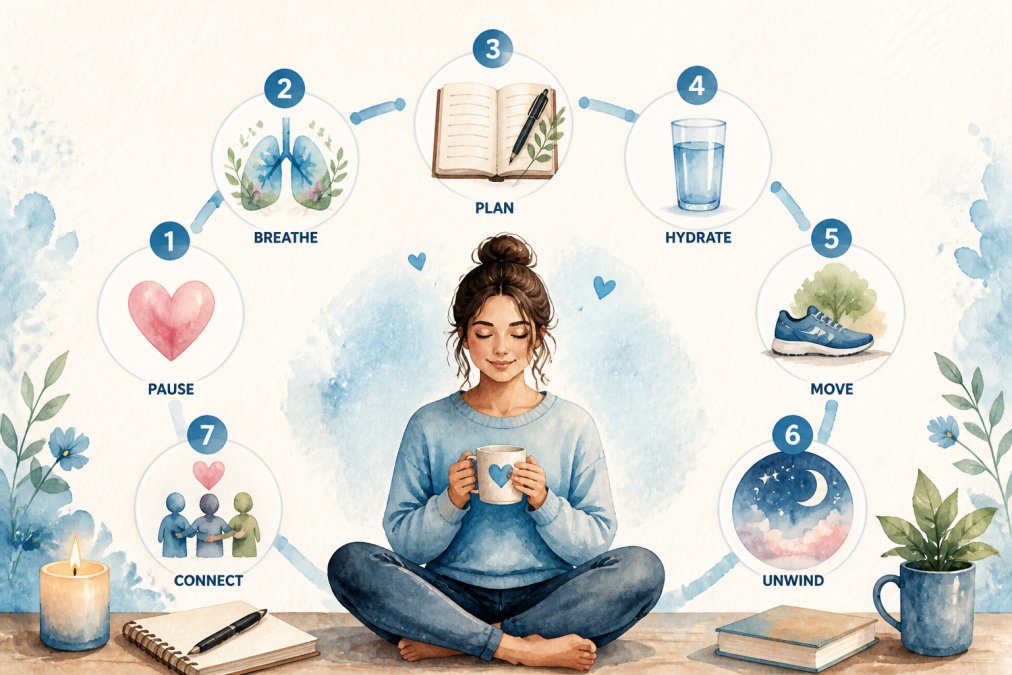
Learning how to stop being stressed starts with a simple truth: you can't remove every pressure from your life, but if you want to stop being stressed, you can change how your body and mind respond to it. This guide from SSBGMARKETINGINC. walks you through seven steps you can use today, even on your busiest days.
Stress is your body's built-in alarm system. When your brain senses a threat, it floods you with hormones like cortisol and adrenaline, which speed up your heart and sharpen your focus. That system is useful in short bursts. It becomes a problem when it never switches off.
Before you begin, gather a few basics:
- A notebook or a notes app on your phone
- Ten quiet minutes, ideally at the same time each day
- Water and a comfortable seat
- A willingness to start small
The American Psychological Association's stress resources notes that long-term stress affects both mental and physical health, which is why daily habits matter more than one-time fixes.
Step 1: Name Your Stress Triggers
You can't manage what you haven't named. Most people feel "stressed" as one big fog, but it's usually five or six specific triggers stacked on top of each other.
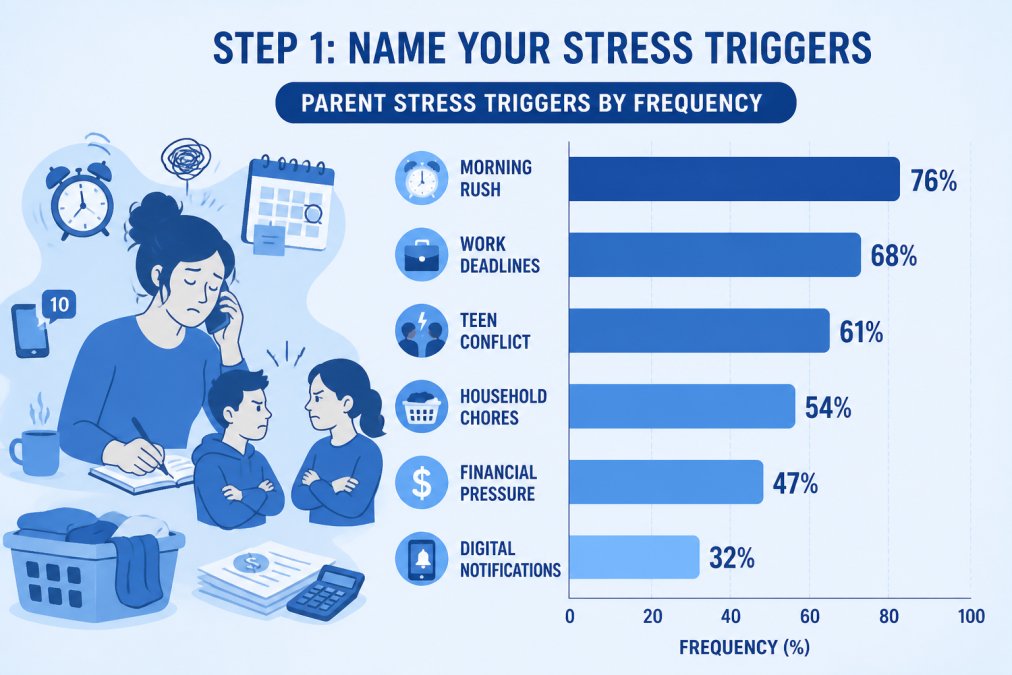
Try this for three days: every time your shoulders tighten, write down what happened right before.
Common triggers for busy parents include:
- The morning rush before school and work
- Work deadlines that pile up
- Conflict or silence from a teenager
- Household chores that never end
- Money pressure
- Constant phone notifications
Step 2: Use 10-Minute Stress Relief Methods
Ten minutes is enough to shift your body out of a stress response, but only if you understand what you're actually trying to change. When your brain perceives a threat, it releases cortisol and adrenaline, which raise your heart rate, tighten your muscles, and speed up your breathing. The goal of any short relief method is to trigger the opposite branch of your nervous system, the parasympathetic "rest and digest" response, so your body gets the signal that the threat has passed.
- Extended-exhale breathing: Breathe in for four counts, hold for four, out for six to eight. The long exhale is the active ingredient. Repeat for two minutes. Best when your heart is racing.
- Physiological sigh: Two quick inhales through the nose, then one long exhale through the mouth. This is one of the fastest ways to lower acute arousal and can be done in a single breath cycle. Best for a spike of panic.
- Progressive muscle relaxation: Tense each muscle group for five seconds, then release for ten. Start at your toes and work up to your face. This works because tension and relaxation can't fully coexist, you're teaching your body the difference. Best before sleep.
- A short walk: Even a lap around the block lowers physical tension and burns off some of the adrenaline already in your system. Ten minutes of brisk walking is enough to notice a shift. Best when you feel restless rather than frozen.
- Grounding: Name five things you can see, four you can hear, three you can touch, two you can smell, and one you can taste. This interrupts the loop of anxious thoughts by forcing your attention onto sensory input. Best when your mind is spiraling.
- A quick journal entry: Write three lines about what's bothering you and one thing you can control. This converts vague worry into a specific, bounded problem. Best when the stress is mental, not physical.
Step 3: Build Mindfulness Habits for Busy Moms
Mindfulness habits for busy moms work best when they're tiny. The goal isn't an hour of silence. It's small moments of attention woven into your real day.
Simple ways to start:
- Take three slow breaths before you pick up your phone in the morning
- Notice the temperature of your coffee for one full sip
- Do a body scan in bed before you sleep
- Spend two minutes writing down one thing you're grateful for
Step 4: Learn How to Stop Feeling Overwhelmed Daily
Learning how to stop feeling overwhelmed daily comes down to reducing what's on your mental list, not just managing your feelings about it. Overwhelm is usually a volume problem, not a willpower problem.
Try these moves:
- Brain dump: Write every task in your head onto one page. Get it out of your mind.
- Pick three: Circle the three things that truly matter today. Ignore the rest until tomorrow.
- Time-block: Give each task a start time. Vague tasks never get done.
- Say no once a day: One small "no" protects your energy for what matters.
Step 5: Cut the Hidden Stress Load
Some stress comes from habits you don't notice. Caffeine intake is a big one. That third cup of coffee at 3 p.m. can keep cortisol levels high and wreck your sleep hygiene.
Other hidden loads:
- Alcohol: It feels calming but fragments sleep and raises anxiety the next day.
- Doomscrolling: Constant news and social feeds keep your stress response switched on.
- Digital notifications: Every ping pulls your attention and adds a small spike of tension.
Common Mistakes That Keep You Stressed
Most people stay stressed because of a few predictable errors. Fixing them matters more than adding new routines.
| Mistake | What It Looks Like | Better Move |
|---|---|---|
| Waiting for calm | "I'll relax when things slow down" | Build small habits now |
| All-or-nothing | Skipping a day, then quitting | Aim for 80% consistency |
| Ignoring the body | Pushing through tension and poor sleep | Address sleep and movement first |
| Doing it alone | Hiding stress from everyone | Lean on social support |
| No boundaries | Saying yes to everything | Set one clear limit |
When to Get Professional Help
- Duration: Trouble sleeping, constant worry, or low mood most days for two weeks or more.
- Function: Stress is interfering with work, school, parenting, or relationships in a way you can't work around.
- Sleep: You can't fall asleep or stay asleep most nights despite good sleep hygiene.
- Appetite or weight: Significant changes you didn't intend.
- Anhedonia: Loss of interest or pleasure in things you used to enjoy.
- Physical symptoms: Persistent chest tightness, headaches, stomach problems, or a racing heart that your doctor hasn't explained.
- Avoidance: You're skipping situations, people, or responsibilities to manage the stress.
- Substances: You're relying on alcohol, caffeine, or other substances to get through the day or to sleep.
- Panic: Recurrent panic attacks, sudden intense fear with a racing heart, shortness of breath, or a sense of doom.
- Hopelessness: Thoughts of harming yourself or others. This is an emergency, call or text 988 (the Suicide & Crisis Lifeline) or go to the nearest emergency room.
If you're supporting a teenage daughter through her own stress, shared practices help. The Teen Girl Glow Up Journal from SSBGMARKETINGINC. gives her a private, relatable space to build self-esteem and healthy habits, and it can open the door to real conversations between you.
Frequently Asked Questions
How do I relieve stress quickly when I only have a few minutes?
Try a 4-7-8 breathing pattern: inhale for 4 counts, hold for 7, exhale for 8. This activates your parasympathetic nervous system and lowers cortisol levels within minutes. Pair it with a physical grounding technique like pressing your feet into the floor or holding something cold. These 10-minute stress relief methods work because they interrupt the stress response before it escalates. Even 90 seconds of slow breathing can reduce physical tension and help you think clearly again.
What are 5 warning signs of stress I should not ignore?
Watch for these signals: trouble falling asleep or staying asleep, irritability over small things, headaches or jaw clenching, difficulty concentrating on simple tasks, and withdrawing from people you normally enjoy. Physical tension in your neck and shoulders is another common marker. When several of these appear together for more than two weeks, your nervous system is stuck in a stress response. That is the point to add deliberate coping mechanisms rather than pushing through.
How can I stop feeling overwhelmed daily without adding more to my plate?
The key is subtraction, not addition. Pick one recurring task you can delegate, delay, or drop entirely. Then set one boundary, like no work emails after 8 p.m. or a 15-minute buffer between school pickup and dinner prep. Journaling for 5 minutes each morning helps you sort mental clutter before it piles up. You do not need a full routine overhaul. One small boundary practiced consistently reduces daily overwhelm more than a perfect schedule you abandon in a week.
What mindfulness habits work for busy moms who have no free time?
Anchor mindfulness to things you already do. Take three deep breaths before you start the car. Do a body scan while waiting for water to boil. Write one sentence of gratitude before bed. These micro-practices take under 2 minutes and build the same nervous system regulation as longer meditation sessions. The goal is frequency, not duration. A 10-minute manifestation journal used daily creates more resilience than a 60-minute session you do once a month.
Stress won't disappear from a busy life, but your response to it can change. Start with one step from this guide today, not all seven. If you want a simple, structured way to build calm into your routine, SSBGMARKETINGINC. offers the 10-Minute Manifestation Journal for Busy Moms and the Teen Girl Glow Up Journal, both built around short, doable daily practices. Get the 3-step manifestation ebook now and give yourself ten minutes a day to reset.