 listicle
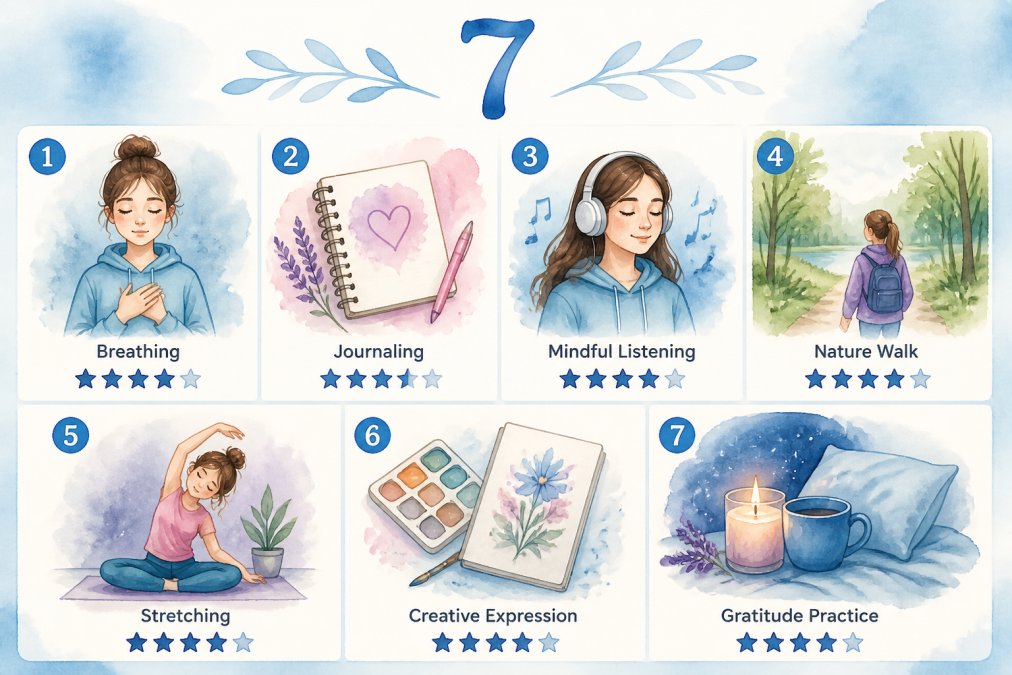
Mindfulness Activities for Teen Daughters: 7 Ideas
Table of Contents
- Why Mindfulness Matters for Teen Girls in 2026
- Mindfulness Exercises for Teen Anxiety
- Mindfulness Journal Prompts for Teens
- How to Teach Mindfulness to Teenagers Without the Eye Roll
- Digital-Age Mindfulness: Activities That Meet Teens on Their Screens
- Neurodivergent-Friendly Mindfulness Activities for Teen Daughters
- Building a 10-Minute Shared Practice With Your Daughter
- Conclusion
- Frequently Asked Questions
Last Updated: September 25, 2026
Why Mindfulness Matters for Teen Girls in 2026
Teen girls today face a unique mix of pressures: social media comparison, academic demands, and the constant pull of notifications. Mindfulness activities for teen daughters offer a practical way to help them pause, breathe, and reset. Research from the American Psychological Association shows that adolescents report higher stress levels than any other age group, and girls often feel it more intensely than boys.
This guide from SSBGMARKETINGINC. breaks down seven concrete practices you can try together. The goal is not perfection. It is a ten-minute habit that fits into real life.
Mindfulness Exercises for Teen Anxiety
The fastest way to calm a racing mind is through the body, not the mind. Two techniques work especially well for teen anxiety because they are quick, private, and easy to remember under pressure.
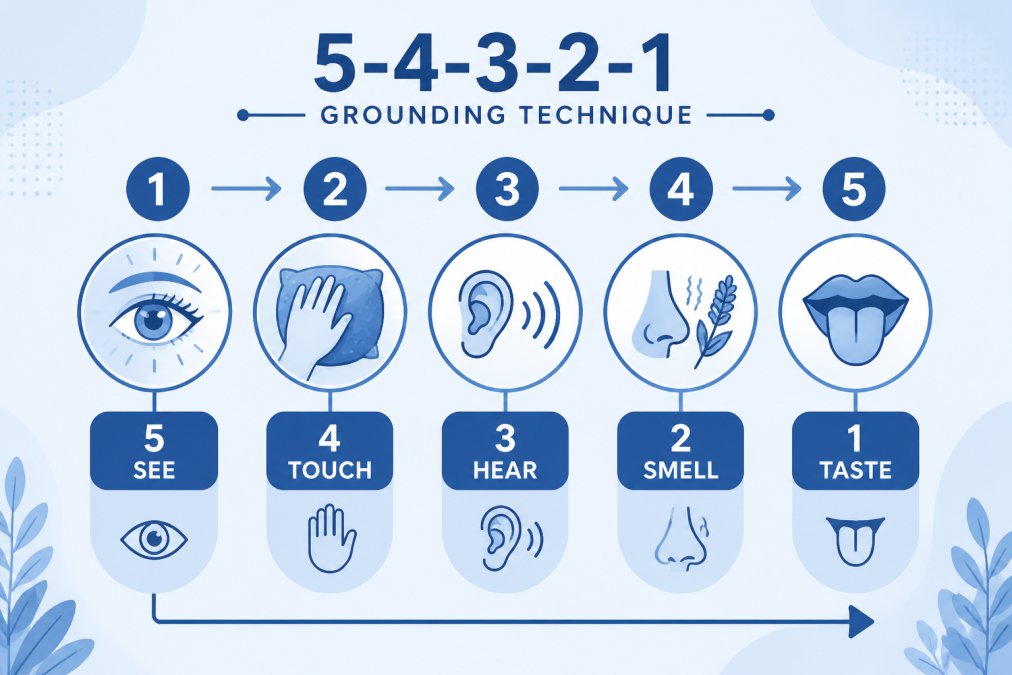
The 5-4-3-2-1 Grounding Technique
This exercise pulls your daughter out of a spiral and back into the room. Ask her to name five things she can see, four she can touch, three she can hear, two she can smell, and one she can taste. The whole sequence takes about ninety seconds.
A common mistake is rushing through it. Slow down each step and let her actually notice texture and sound. This is sensory awareness in action, and it works because it gives the anxious brain a concrete job.
Box Breathing for Test-Day Nerves
Box breathing means inhaling for four counts, holding for four, exhaling for four, and holding again for four. Repeat four times. It lowers the heart rate and steadies shaking hands before a test or a presentation.
The thing nobody tells you is that teens often resist "breathing exercises" until they feel the effect once. Try it together before something mildly stressful, like a driving lesson, so the association is positive.
Mindfulness Journal Prompts for Teens
Writing slows down negative thought patterns in a way that talking sometimes cannot. A wellness journal gives your daughter a private space to sort through feelings without an audience.
5 Prompts That Work Even for Skeptical Teens
- What drained me today, and what filled me up?
- Name one thing I handled better than I would have a year ago.
- What is one thought I keep repeating, and is it actually true?
- Who made me feel safe this week, and why?
- If tomorrow went perfectly, what would the first hour look like?
These prompts build emotional intelligence and self-reflection without feeling like homework. The Child Mind Institute notes that journaling helps teens externalize worries they might otherwise keep bottled up.
How to Teach Mindfulness to Teenagers Without the Eye Roll
The trick is to stop calling it mindfulness. Teens tune out the moment something sounds like a wellness lecture. Frame these as tools for focus, sports performance, or handling drama, and resistance drops fast.
Lead With the Outcome, Not the Practice
Teen girls are practical. They will try something that helps them sleep, calm down before a game, or stop replaying an argument at 1 a.m. They will not try something because it is good for them. So the pitch matters more than the technique.
- Instead of "let's do a breathing exercise," try "I found something that helps me stop overthinking, want to try it with me?"
- Instead of "mindfulness is proven to reduce anxiety," try "this is what athletes do before a free throw."
- Instead of assigning a journal, leave yours open on the counter with a prompt visible.
Model It Out Loud
Modeling beats instruction every time. If you breathe through a frustrating moment out loud, "I'm going to take three breaths before I answer that email", she notices. Narrating your own regulation teaches the skill without ever asking her to perform it.
A common approach is a two-minute reset after school: phones down, feet on the floor, three slow breaths, then talk. Do it yourself first for a week before inviting her in.
The Peer-to-Peer Angle Most Guides Miss
Solo practice is not the only path. Teen girls are wired for connection, and mindfulness that happens with a friend often sticks better than anything a parent introduces. Consider:
Get the 3-step manifestation ebook now →
- A two-person breathing challenge, both inhale for four, exhale for six, and see who can go longer without laughing. The laughter is fine; it still slows breathing.
- A shared journal swap, two friends answer the same prompt and trade pages once a week.
- A pre-game or pre-performance ritual, a short grounding sequence a friend group does together before tryouts, recitals, or exams.
- A walking-and-talking practice, a ten-minute walk with no phones, where each person names one thing that felt heavy and one that felt light.
Peer-led practice removes the parent-teen power dynamic entirely, which is often the real obstacle.
Troubleshooting the Eye Roll
- "This is weird." Agree. Say it is weird, then do it anyway for sixty seconds. Curiosity beats persuasion.
- "I don't have time." Shrink it. One minute is a real practice.
- "It doesn't work." Ask what she noticed, not whether it worked. The noticing is the skill.
- "You're only saying this because you read an article." True. Say so. Honesty keeps the door open.
Digital-Age Mindfulness: Activities That Meet Teens on Their Screens
Most guides ignore the fact that your daughter lives on her phone. Fighting that is a losing battle. Instead, use the screen as the delivery system.
Guided meditation apps, a two-minute breathing timer, or a digital journal she can open in bed all work because they live where she already is. The Pew Research Center reports that the vast majority of teens are online near-constantly, so meeting them there is practical, not indulgent.
A simple rule that works: one mindful minute before scrolling. It creates a pause between impulse and action.
Neurodivergent-Friendly Mindfulness Activities for Teen Daughters
Standard "sit still and breathe" advice fails many neurodivergent teens. For a daughter with ADHD or sensory sensitivities, movement-based and short practices work far better.
Try a body scan while lying under a weighted blanket, or mindful walking where she names each sensation in her feet. Keep sessions under three minutes. Repetition matters more than duration.
Building a 10-Minute Shared Practice With Your Daughter
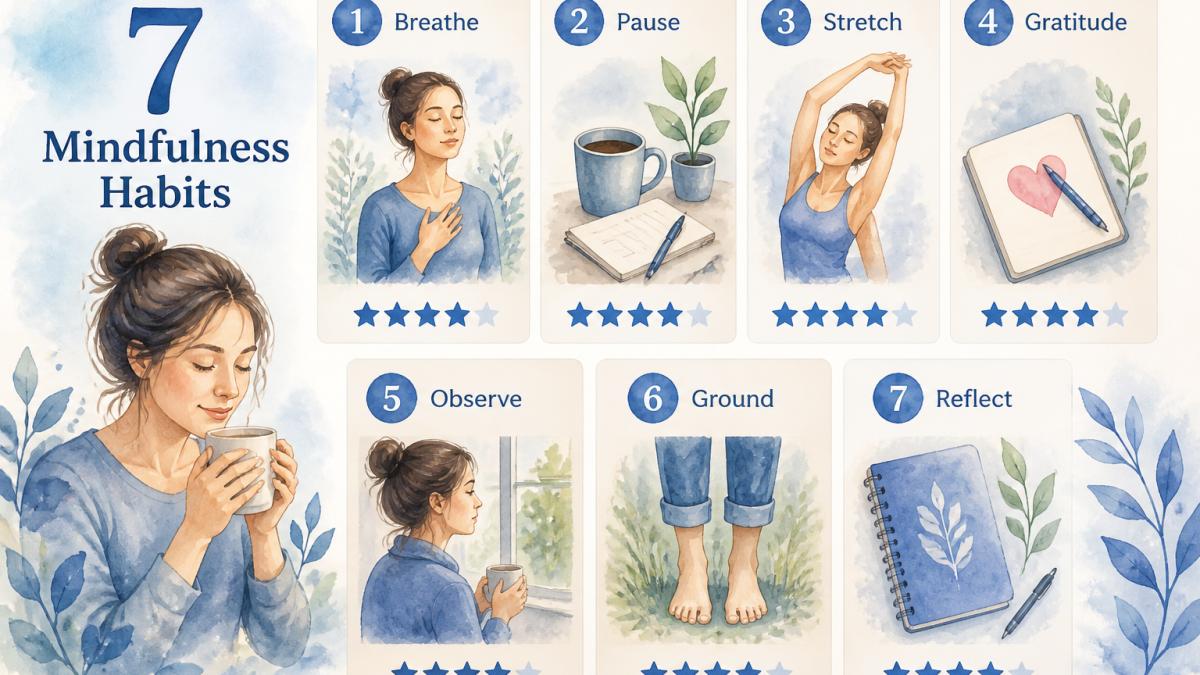
The most durable habit is one you build together. Ten minutes, same time each day, no phones in the room. This is where the mother-daughter bond deepens, because you are both practicing, not one instructing the other.
| Activity | Time | Frequency | Best For |
|---|---|---|---|
| 5-4-3-2-1 grounding | 2 min | As needed | Anxiety spikes |
| Box breathing | 3 min | Daily | Test nerves |
| Journal prompt | 5 min | 3x weekly | Emotional regulation |
| Body scan | 4 min | Bedtime | Sleep and calm |
| Mindful walk | 10 min | Weekend | Connection |
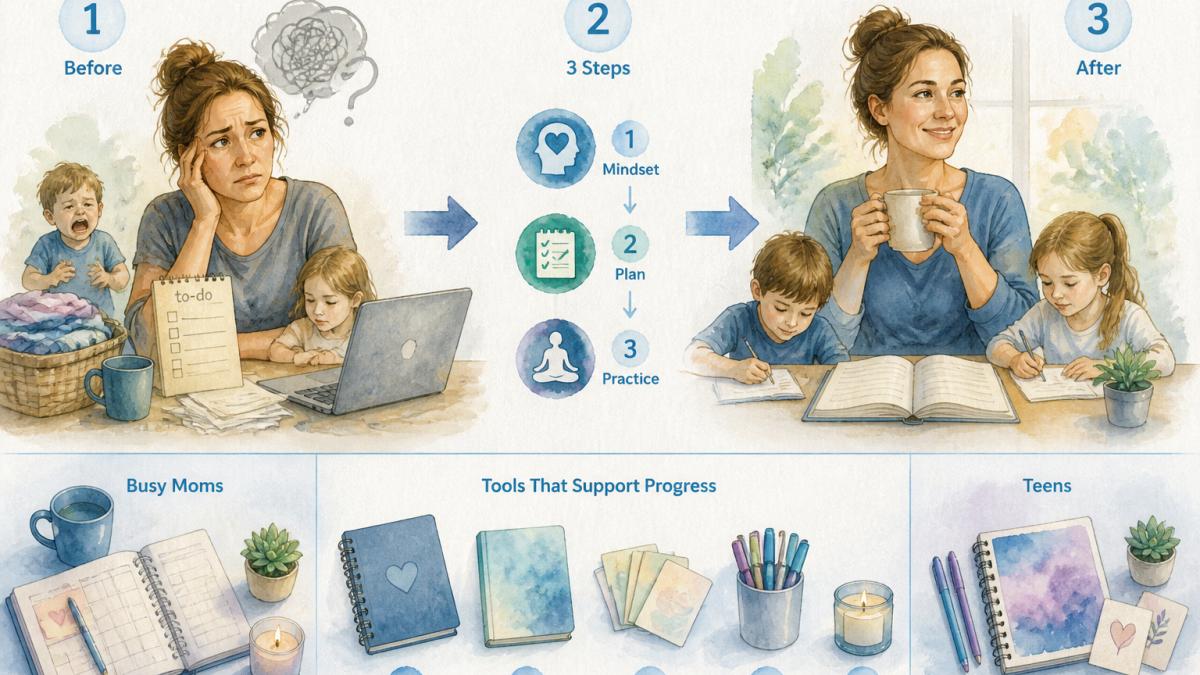
A shared journal can anchor the routine. SSBGMARKETINGINC. created the Teen Girl Glow Up Journal to give teens a structured, low-pressure way to build these habits, and the 10-Minute Manifestation Journal for Busy Moms so you have your own practice running alongside hers.
Conclusion
Teen stress will not disappear, but your daughter's ability to handle it can grow. Start with one activity from this list, keep it short, and do it together. SSBGMARKETINGINC. offers the 3-step digital journals that make these habits stick, from the Teen Girl Glow Up Journal for her to the 10-Minute Manifestation Journal for you. Get the 3-step manifestation ebook now and build a calmer routine you both look forward to.
Frequently Asked Questions
What are some examples of mindfulness activities for teenagers?
Teens respond well to short, concrete practices. Try the 5-4-3-2-1 grounding technique using the five senses, box breathing (inhale four counts, hold four, exhale four, hold four), or a body scan before bed. Journaling with prompts like 'What drained me today?' builds self-reflection. A ten-minute walk without headphones practices sensory awareness. The key is keeping each activity under fifteen minutes so it fits between homework and social life.
How can mindfulness help improve self-esteem in teenage girls?
Mindfulness interrupts negative thought patterns before they harden into beliefs. When a teen notices 'I'm not good enough' and names it as a thought rather than a fact, she creates distance from it. Regular practice builds emotional regulation and resilience, which support self-esteem over time. Journaling prompts that ask her to record small wins, like a good grade or a kind moment with a friend, give her concrete evidence of her own capability to look back on.
How can mothers introduce mindfulness to their teen daughters without resistance?
Don't frame it as self-help. Teens reject anything that feels like a lecture or a fix. Instead, do the practice yourself where she can see it, then invite her once without pressure. Try a shared ten-minute wind-down: you journal, she journals, no discussion required. If she says no, drop it and try again in a week. Modeling calm and consistency matters more than getting her to participate on your schedule.
What are the 5 R's of mindfulness?
The 5 R's are commonly taught as: Recognize (notice what's happening), Release (let the tension or thought go), Relax (soften your body), Re-center (return to your breath or senses), and Repeat (bring attention back as often as needed). For teens, this framework works as a reset button during stressful moments like a fight with a friend or a tough class. Each step takes seconds, so it fits into a hallway pass or a study break.