 listicle
7 Minimalist Habit Tracking Ideas for Busy Moms
Last Updated: November 1, 2026
Quick Summary
Minimalist habit tracking means recording one or two daily actions with the smallest possible system, usually a single checkmark, dot, or tap, so consistency survives a chaotic schedule. Track a single habit for the first month, pick one symbol, and let the record be ugly.
- Track one habit for the first month and add a second only once the first feels automatic.
- Choose one symbol, dot, checkmark, or X, and never change it.
- If you cannot complete your check-in while the coffee brews, the system is too heavy.
- Start with paper for two weeks before considering an app.
- When you miss a day, mark the gap, name the cause, shrink the habit, and resume at the next anchor.
Table of Contents
- Why Minimalist Habit Tracking Works Better for Moms
- Minimalist Habit Tracker Ideas That Take Under a Minute
- Best Habit Tracking Apps for Moms Who Want Simple
- A Habit Tracker Printable for Moms Who Prefer Paper
- Building a Simple Morning Routine for Moms Around One Habit
- What to Do When You Miss a Day (Without the Guilt)
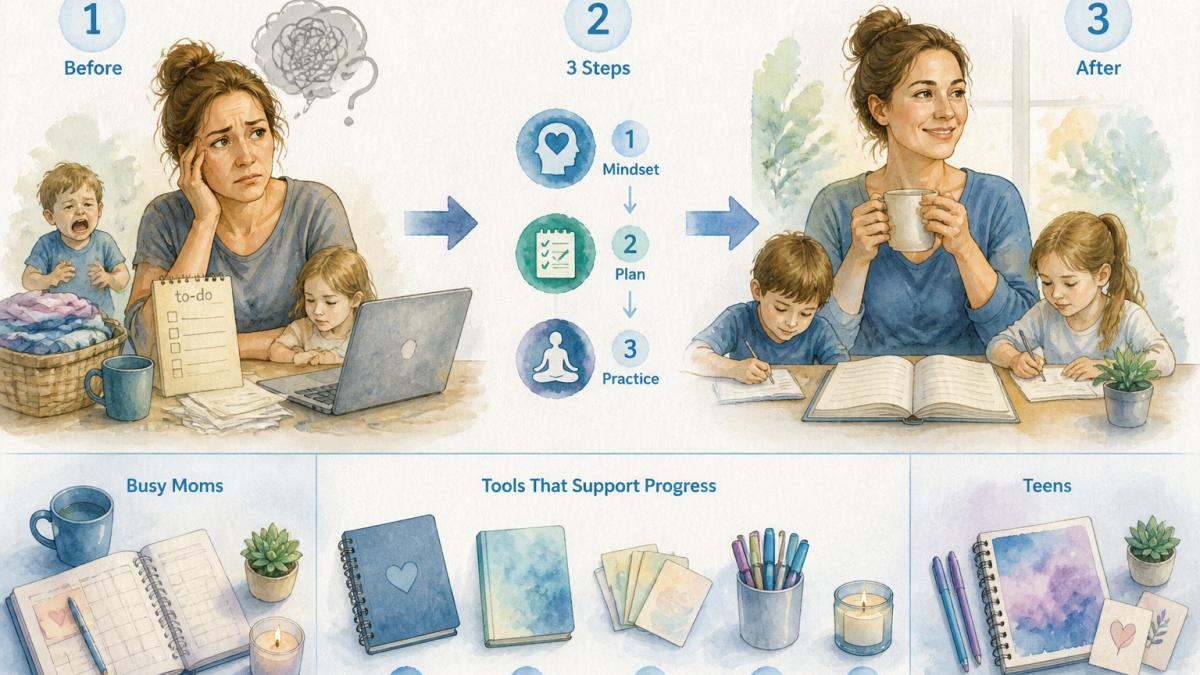
- Start Your 3-Step Habit Reset With Clarity in 3 Steps
- Frequently Asked Questions
Why Minimalist Habit Tracking Works Better for Moms
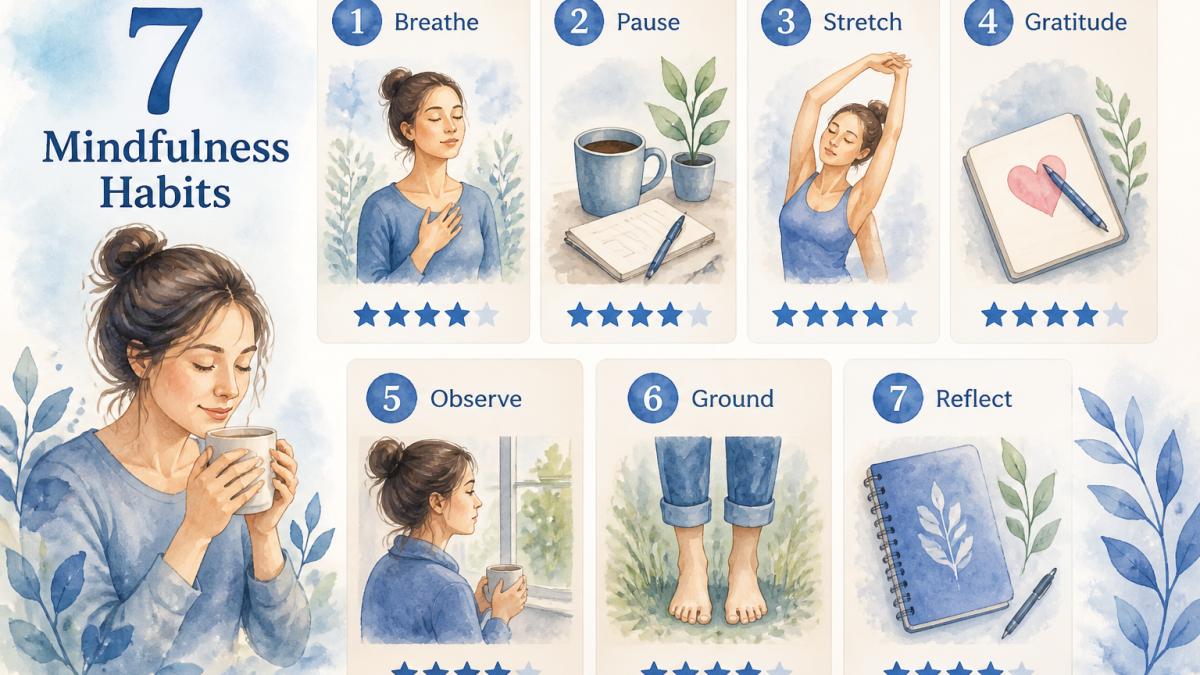
Minimalist habit tracking is the practice of recording one or two daily actions with the smallest possible system, usually a single checkmark, dot, or tap, so consistency survives a chaotic schedule. Elaborate trackers are often the first thing busy moms abandon. A tracker that takes twenty seconds to open asks for more than most mornings can give. Pair it with these mindfulness habits for busy moms that fit a low-friction routine.
The Problem With Most Habit Trackers
Most habit trackers fail for a boring reason: they ask for maintenance before they deliver value. You download an app, pick twelve habits, set reminders, choose colors, and by Thursday the whole thing feels like another job you are failing at.
Watch out: the common mistake is starting with a full dashboard on day one. When life gets loud, that dashboard is the first thing you close.
What Low-Friction Tracking Actually Looks Like
Low-friction tracking means the record takes under a minute and lives where you already are. A dot on a paper calendar stuck to the fridge counts. The American Psychological Association's guidance on building healthy habits points in the same direction: small, repeatable actions beat ambitious plans that collapse under pressure.
The test is simple. If you cannot complete your check-in while the coffee brews, the system is too heavy.
Minimalist Habit Tracker Ideas That Take Under a Minute
Here is the short version: pick fewer habits, pick one mark, and let the record be ugly. A minimalist habit tracker works because it removes decisions, and decisions are what drain you before 8 a.m.
The One-Habit Rule
Track a single habit for the first month. One. Many moms find that one anchor habit, like drinking water before school drop-off or a two-minute breathing pause, creates more momentum than five half-tracked goals. Add a second habit only after the first one feels automatic.
Dot, Checkmark, or X: Pick One and Move On
Choose one symbol and never change it. A dot means done. A checkmark means done. An X means done. The symbol itself does not matter; the repetition does. This is the core of minimalist habit tracker ideas that actually stick: fewer choices, less friction, more consistency. If you want another quick, low-friction daily practice, try this daily gratitude for busy moms.
| Tracking Method | Time Per Day | Best For | Watch Out For |
|---|---|---|---|
| Single dot on a wall calendar | Under 10 seconds | Visual progress at a glance | Needs to be visible, not in a drawer |
| Checkmark in a notes app | Under 15 seconds | Moms already on their phone | Easy to forget if notifications are off |
| X on a printable 30-day tracker | Under 10 seconds | Paper lovers and kids watching | Print a fresh sheet each month |
| One-tap check-in in an app | Under 5 seconds | Streak tracking and reminders | Too many features invite tinkering |
Best Habit Tracking Apps for Moms Who Want Simple
The best habit tracking app for a busy mom is the one she can open, tap once, and close. Feature count matters less than how quickly the daily check-in finishes. Trackers that keep the surface small are the easiest to stick with, and the format question is worth asking before choosing an app.
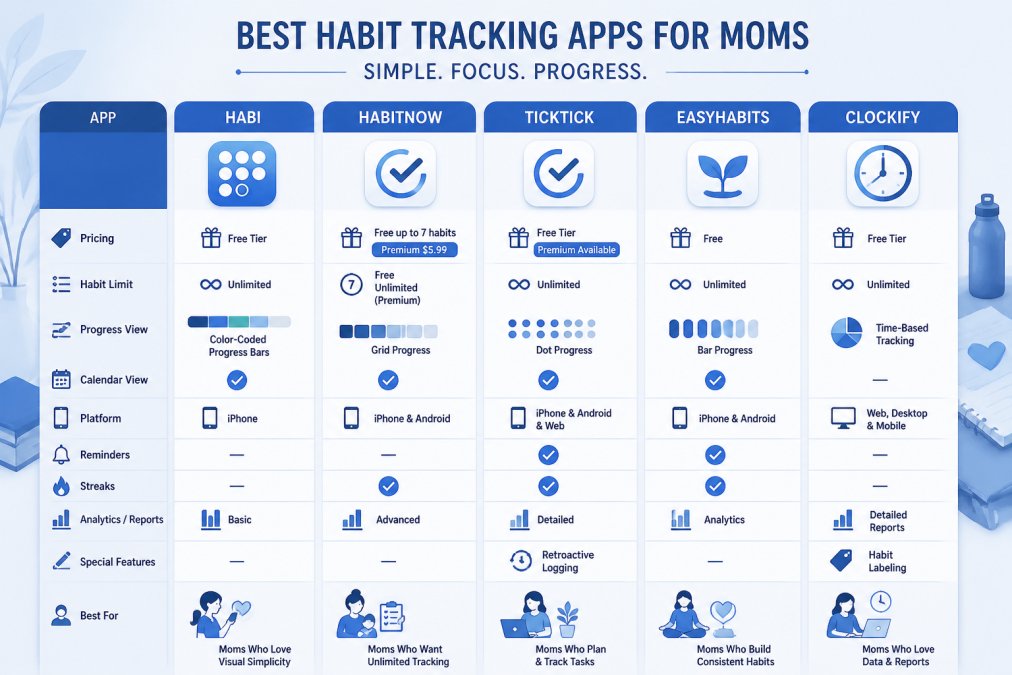
- Habi: color-coded progress bars and calendar views make activity easy to review, and core tracking is free. Check platform support before downloading.
- HabitNow: offers a free tier and a paid Premium tier. Confirm current pricing and billing terms on the app's site before you commit.
- TickTick: useful if you want habits and everyday tasks in one place, and retroactive logging means a missed check-in can be filled in later.
Paper or Digital? A 60-Second Decision Guide
Most app roundups assume you want an app. Many moms do not, and the format you pick should match your day, not the other way around. Use these five questions before you download anything:
| Question | Lean paper if... | Lean digital if... |
|---|---|---|
| Where is your phone during the habit? | It is in another room or on silent | It is already in your hand |
| Who needs to see the progress? | Kids or a partner should see it on the fridge | It is private to you |
| How do reminders fit your day? | Notifications get buried or ignored | A scheduled alert actually reaches you |
| How much setup can you tolerate? | You want to start in under two minutes | You are willing to configure once |
| What happens on a low-energy day? | A pen and a wall are always available | One tap beats finding a pen |
A common pattern among moms is to run both: a paper sheet on the fridge for the family-visible habit and a one-tap app for the private one. That is not indecision; it is matching the tool to the job.
A Habit Tracker Printable for Moms Who Prefer Paper
A habit tracker printable is a one-page sheet with the habit named at the top and a grid of days below, marked with a dot, checkmark, or X.
Print a simple 30-day tracker with one row per habit and one column per day. Tape it where you make coffee. The visual progress of a filling grid does more for consistency than a notification ever will.
Building a Simple Morning Routine for Moms Around One Habit
A simple morning routine for moms works best when it hangs on a single habit rather than a long sequence. Attach your one habit to something that already happens every day, like the kettle or the school run, and the routine builds itself.
Get the 3-step manifestation ebook now →
Here is the pattern we recommend:
- Name the anchor: the thing you already do without thinking.
- Attach the habit: two minutes of breathing, water, or a gratitude line.
- Mark it immediately: dot, checkmark, or tap before you move on.
That is the whole routine.
What to Do When You Miss a Day (Without the Guilt)
Missing a day is not a failure; it is data. The minimalist response is to mark the gap, skip the apology, and resume at the next check-in.
Most streak-based tools imply that a missed day breaks something. That framing is wrong for motherhood, where interrupted routines are the norm rather than the exception. A tracker that punishes a sick kid, a night shift, or a postpartum flare-up is measuring the wrong thing.
The Compassionate Reset, in Four Steps
When you miss a day, run this instead of spiraling:
- Mark the gap, do not erase it. Leave the empty box visible. An honest record is more useful than a perfect-looking one.
- Name the cause in three words or fewer. "Sick kid." "Travel." "Exhausted." This turns a vague failure into a specific, temporary event.
- Shrink the habit for the next check-in. If the full habit was ten minutes of stretching, the reset version is two minutes. The goal is to re-enter, not to catch up.
- Resume at the next natural anchor. Do not wait for Monday, a new month, or a fresh printable. The next kettle boil is the reset point.
Redefine the Habit So It Survives Real Life
A habit that only works on good days is not a habit; it is a fair-weather plan. Flexible definitions keep the streak honest without making it brittle:
- Movement: "a walk" becomes "any movement outside the bed," including stretching in the kitchen.
- Self-care: "a skincare routine" becomes "one thing I do for myself," which can be a glass of water.
- Connection: "family dinner" becomes "one undistracted conversation," which can happen in the car.
If your schedule is genuinely chaotic, a habit small enough to fit inside the chaos is more likely to last than one that waits for things to calm down. For reassurance, see whether mindfulness habits can survive a chaotic daily schedule.
Start Your 3-Step Habit Reset With Clarity in 3 Steps
Ready to begin? Here is the reset, and it takes one sitting:
- Choose one habit you can complete in under two minutes.
- Choose one mark and one place to record it.
- Choose one anchor in your day to attach it to.
That is the entire system. Our 10-Minute Manifestation Journal for Busy Moms is a short daily gratitude and visualization practice that fits a hectic schedule. The Teen Girl Glow Up Journal is another option if you want to build habits alongside your daughter.
Frequently Asked Questions
How do you track habits without getting overwhelmed?
Track one habit at a time and use the lowest-effort method you can find: a single dot on a paper calendar, one tap in an app, or a checkmark on a printable tracker. Keep the tracker where you already look every day, like the fridge or your phone's home screen. When a habit feels automatic after a few weeks, add the next one. Minimalist habit tracking works because it removes decisions, not because it captures more data.
What is the best way for a busy mom to start habit tracking?
Pick one habit tied to something you already do, such as drinking water after school drop-off or writing one line in a journal before bed. Choose a tracker format you can complete in under 30 seconds, either a printable habit tracker for moms kept on the counter or a free app like Habi or HabitNow. Give it two weeks before judging results. Starting with a single daily habit beats a ten-habit spreadsheet every time.
Are paper habit trackers better than apps for moms?
It depends on where you already spend attention. A printable tracker on the fridge is visible during the chaos of the day and needs no unlocking, charging, or notifications. Apps win when you want reminders, streak tracking, or calendar heatmaps without printing anything. Many moms use paper for the habit itself and an app for the reminder. Try one format for two weeks, then switch only if it felt like friction.
What are some minimalist habit tracker ideas for beginners?
Try a 30-day tracker with one row and 30 boxes, a wall calendar where you draw a single dot per day, a notes-app checklist you duplicate weekly, or a one-tap app widget on your home screen. Each of these takes seconds to mark and shows visual progress at a glance. The point of minimalist habit tracker ideas is fewer decisions: one habit, one mark, one place to look.
How do I handle missing days without quitting?
Plan for misses before they happen. Use a tracker that allows retroactive logging, like TickTick, or keep a paper tracker where you can fill in yesterday's box this morning. Follow the rule of never missing twice: one skipped day is data, two in a row is a signal to shrink the habit. Streaks are useful for consistency, but a broken streak is not a failed system.
The hardest part of habit tracking is not the tracking. It is believing a small system is enough. It is. Get started with SSBGMARKETINGINC. and turn one habit into a daily practice that survives real life.