 listicle
Mindfulness Habits for Busy Moms: 7 Quick Practices
Table of Contents
- The 5-Minute Mental Reset: Mindfulness Habits for Busy Moms
- A Simple Morning Routine for Moms to Start Grounded
- The 10-Minute Mindfulness Routine for Chaotic Days
- Mindfulness Activities for Overwhelmed Moms in High-Stress Moments
- Digital Mindfulness: Breaking the Tech-Life Balance Struggle
- Mindful Parenting: Connecting with Your Teen Through Shared Habits
- Conclusion: Your Next Step to Intentional Living
- Frequently Asked Questions
Last Updated: September 28, 2026
The 5-Minute Mental Reset: Mindfulness Habits for Busy Moms
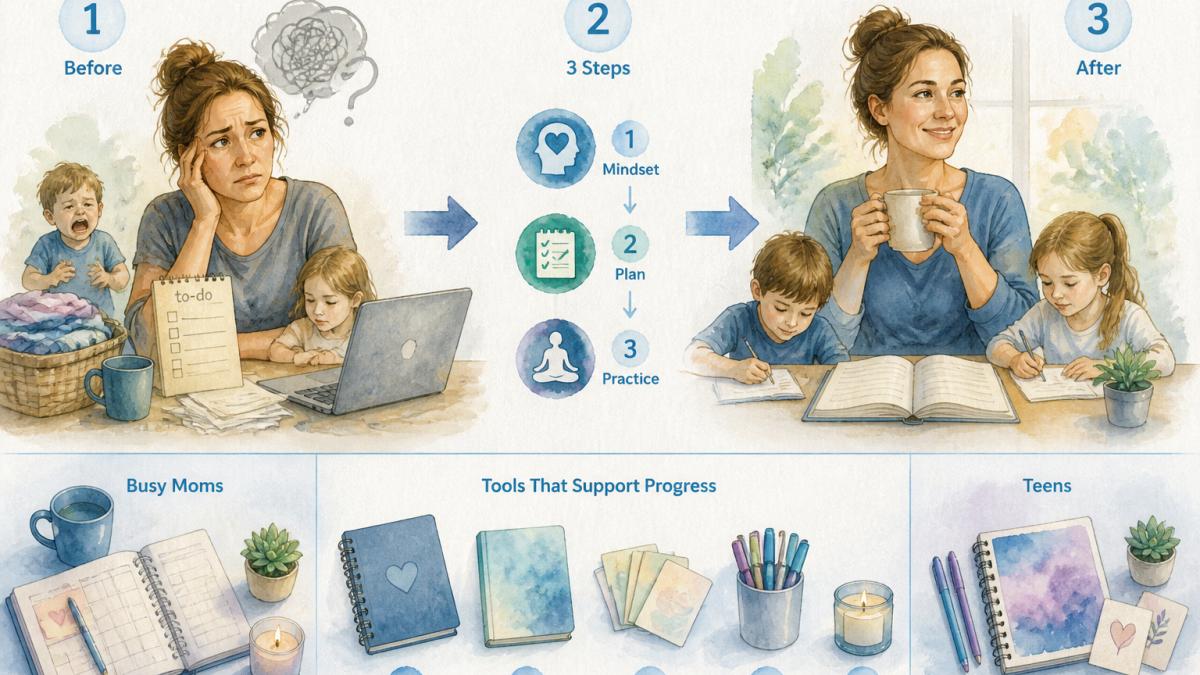
Most moms don't quit mindfulness because they lack discipline. They quit because they tried to meditate for 30 minutes, failed on day three, and decided they weren't "the type." This guide from SSBGMARKETINGINC. takes the opposite approach: mindfulness habits for busy moms that fit inside the gaps you already have, not the gaps you wish you had. Five minutes counts.
Why Micro-Habits Beat Marathon Meditation
Short, repeatable practices stick; long ones collapse under real schedules. A five-minute breath practice done daily beats a 30-minute session done twice a month, because habit formation depends on repetition, not duration. The American Psychological Association's guidance on stress management makes the same point: brief, regular stress-reduction practices are easier to maintain than infrequent long ones. Start with one anchor habit, attach it to something you already do (coffee, school drop-off, the drive home), and let it grow from there.
A Simple Morning Routine for Moms to Start Grounded
A simple morning routine for moms works best when it takes under five minutes and happens before the phone comes out. Here's a three-step version you can run tomorrow:
- Two minutes of stillness. Sit up in bed. Feel your feet and your breath. No app needed.
- One sentence of intention. Say what kind of mom you want to be today. "Patient" and "present" are enough.
- One glass of water, one deep breath. Drink slowly. This is your reset button before the day starts asking for things.
The 10-Minute Mindfulness Routine for Chaotic Days
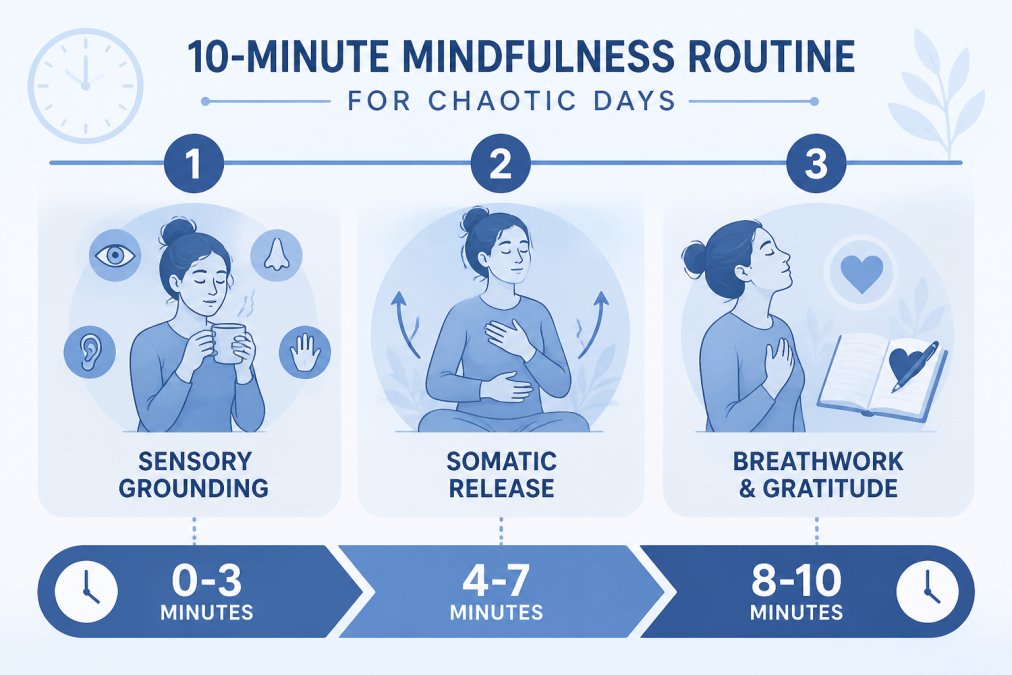
A 10-minute mindfulness routine fits into almost any day, even a chaotic one, because it's built from three short blocks rather than one long sit. Use it during nap time, a lunch break, or after the kids are in bed. What separates this version from the standard "breathe and journal" advice is that it works bottom-up, through the body first, instead of asking an already-fried brain to think its way into calm.
Minute 1-3: Sensory Grounding
Name five things you can see, four you can hear, three you can touch, two you can smell, and one you can taste. This is sensory grounding, and it pulls your attention out of the spiral and into the room you're actually standing in. It works in a grocery store aisle, a parking lot, or a bathroom with the door locked.
Minute 4-7: Somatic Release (The Part Most Guides Skip)
Stress lives in the body before it lives in your thoughts, so before you try to calm your mind, give your muscles somewhere to put the tension. Pick one of these:
- Progressive muscle release. Tense your shoulders up toward your ears for five seconds, then let them drop. Repeat with your jaw, then your hands. The contrast between tension and release is what teaches your nervous system the difference.
- Physiological sigh. Two short inhales through the nose, one long exhale through the mouth. This is one of the fastest known ways to downshift a stressed nervous system, and it takes about ten seconds.
- Feet-and-floor check. Press both feet flat into the floor and notice the pressure. If you're standing at the stove, this is your entire practice.
Minute 8-10: Breathwork and Gratitude
Now that your body has softened, write three specific things that went right today, then breathe in for four counts and out for six. Gratitude journaling and slow exhales both calm the nervous system, and pairing them means you only need one habit slot. A dedicated gratitude practice resource from UC Berkeley's Greater Good Science Center explains why specificity matters: "family" is too vague to shift your mood, but "my daughter laughed at my terrible joke at dinner" is not.
Mindfulness Activities for Overwhelmed Moms in High-Stress Moments
Mindfulness activities for overwhelmed moms need to work in 60 seconds or less, because that's all you get mid-tantrum or mid-argument. But here's what almost every guide gets wrong: they teach you to calm yourself down, then assume the calm will handle the conflict. It won't. High-conflict moments with kids require two moves, regulate yourself first, then co-regulate your child, and the second move is the one nobody writes about.
Step 1: Regulate Yourself (10-30 Seconds)
You cannot co-regulate a dysregulated child from a dysregulated nervous system. Pick one of these and run it before you say a word:
- Box breathing. In for four, hold for four, out for four, hold for four. Repeat four times.
- The hand-on-chest pause. One hand on your chest, one on your belly. Three slow breaths before you respond.
- The doorway reset. If you can physically step into another room for ten seconds, do it. Distance is a legitimate mindfulness tool, not a failure of patience.
Step 2: Co-Regulate Your Child (The Missing Move)
A child mid-meltdown is not processing logic. Their prefrontal cortex is offline, which is why "calm down" and "use your words" make things worse. What actually works is lending them your regulated nervous system until theirs comes back online:
Get the 3-step manifestation ebook now →
- Lower your voice instead of raising it. A quieter voice forces a child to lean in to hear you, which subtly pulls them out of the spiral.
- Get on their level. Crouching down changes the power dynamic and signals safety rather than threat.
- Name the feeling without fixing it. "You're really mad that we had to leave the park." Naming an emotion reduces its intensity, this is a well-documented pattern in emotion research, not a parenting hack.
- Offer a physical anchor. A hand on the back or a slow rocking motion gives their body the same somatic reset you just gave yours.
Step 3: Cognitive Reframing (For You, Afterward)
Once the storm passes, swap "this is a disaster" for "this is hard, and it will pass." Same situation, less panic. Do this after the moment, not during it, trying to reframe your thoughts while a toddler is screaming is like trying to read a book in a wind tunnel.
Digital Mindfulness: Breaking the Tech-Life Balance Struggle
Digital mindfulness is the practice of noticing when your phone is running your attention instead of the other way around. It's the part of mindfulness most guides skip, and for moms it's often the biggest stressor. Try these:
- No phone for the first 10 minutes after waking. Your morning routine depends on it.
- One screen-free meal per day. Even one is enough to reset the family's attention.
- Turn off non-human notifications. Texts and calls stay on. Everything else waits.
Mindful Parenting: Connecting with Your Teen Through Shared Habits
Mindful parenting with a teenager looks different from mindfulness with a toddler. Teens don't want to be managed; they want to be met. The trick is to practice side by side instead of face to face. A shared five-minute evening journal, a walk without phones, or a Sunday check-in where you both write one thing you're grateful for turns mindfulness into a bonding ritual instead of a lecture.
Conclusion: Your Next Step to Intentional Living
The hardest part of mindfulness isn't the practice. It's believing five minutes is enough to matter. It is. Start with one habit, anchor it to something you already do, and let it grow. SSBGMARKETINGINC. builds minimalist tools for exactly this kind of reset, including the 10-Minute Manifestation Journal for Busy Moms and the Teen Girl Glow Up Journal for the daughter you're raising alongside you.
Frequently Asked Questions
How can a busy mom practice mindfulness?
You do not need an hour of silence. Start with a 10-minute mindfulness routine that fits into your existing schedule. Try a simple morning routine for moms where you spend three minutes on sensory grounding, four minutes on gratitude journaling, and three minutes on deep breathing. You can also practice mindful observation while washing dishes or waiting in the school pickup line. The goal is consistency, not duration.
What are some simple mindfulness habits for parents?
Simple mindfulness habits for parents include taking three deep breaths before entering the house after work, doing a body scan while lying in bed, and practicing mindful listening when your child speaks without interrupting. Another effective habit is habit stacking: attach a new mindfulness practice to an existing routine, like taking five deep breaths right after pouring your morning coffee. These small actions reduce stress without adding time to your day.
How do you stay mindful when you are overwhelmed as a mom?
When emotional overwhelm hits, use the 5-4-3-2-1 grounding technique. Name five things you can see, four you can touch, three you can hear, two you can smell, and one you can taste. This sensory grounding pulls your attention away from spiraling thoughts and back to the present moment. You can do this in under two minutes, even in the middle of a conflict or a chaotic morning.
Can mindfulness help with mom burnout?
Yes. Mindfulness helps with burnout prevention by lowering cortisol and giving you a mental reset button. Research shows that brief daily practices reduce symptoms of parental stress and improve emotional regulation. The key is to start small. A 10-minute daily ritual of deep breathing and gratitude journaling can shift you from survival mode to intentional living. For structured support, the 10-Minute Manifestation Journal for Busy Moms offers a guided 3-step framework.
What is a simple morning routine for moms to stay grounded?
A simple morning routine for moms can be as short as five minutes. Before checking your phone, drink a glass of water, take five deep breaths, and write down one thing you are grateful for. This sequence sets a calm tone for the day and builds self-compassion. If you want a guided format, try a digital journal that prompts you through these steps so you do not have to plan them yourself.