 comparison
7 Best Mindfulmazing Alternatives for Busy Parents
Last Updated: November 5, 2026
Quick Summary
The best mindfulmazing alternatives for busy parents are parent-focused digital journals, mindfulness apps like Headspace and Insight Timer, and paired parent-and-teen journal sets. Match the tool to who needs support and how much time you realistically have, since a ten-minute practice you actually do beats a thirty-minute one you skip.
- Mindfulmazing-style printable kits suit ages roughly 4-12 but require 15-30 minutes plus printing.
- A parent-focused digital journal takes 5-10 minutes daily and is a one-time purchase with no subscription.
- Headspace offers 3-20 minute sessions and suits beginners who want structure.
- Insight Timer has a large free library with sessions from 1-60 minutes.
- Start with the smallest habit version, protect it for two weeks, then add a second.
Table of Contents
- Why Busy Parents Look Beyond Mindfulmazing
- Mindfulness Apps for Busy Parents Compared
- Digital Journals and Kits That Replace Child-Focused Resources
- Mindful Parenting Techniques That Work in Under 10 Minutes
- Mindfulness Activities for Parents and Children to Do Together
- Daily Habits for Intentional Parenting That Stick
- Choosing the Right Mindfulmazing Alternative for Your Family
- Frequently Asked Questions
Why Busy Parents Look Beyond Mindfulmazing
Mindfulmazing alternatives matter most to parents who want calm, connection, and emotional skills without adding another subscription to an already crowded week. Overwhelmed moms often say the same thing: the tools exist, but the time doesn't.
A common complaint is fit. A worksheet-based resource assumes a parent has twenty quiet minutes and a printer that cooperates. Many households have neither.
That gap is exactly where this comparison starts. Below, we break down seven options by cost, age suitability, time required, and whether each one serves the parent, the child, or both. For a direct look at how one parent-focused option stacks up, see our Mindfulmazing vs Momlifecoach comparison.
Mindfulness Apps for Busy Parents Compared
Mindfulness apps for busy parents win on convenience: no printing, no prep, and a session you can start in the school pickup line. The trade-off is that most are built for adults, so they support your calm without teaching your child anything. The comparison below looks past the marketing pages at what actually decides whether an app survives a chaotic week: session length, free-tier limits, age fit, sensory and accessibility considerations, and the evidence behind the approach. For concrete alternatives to the apps being compared, see these quick mindfulness practices for busy moms.
Calm, Headspace, and Insight Timer Side by Side
Here is how the three compare on the factors that actually decide it:
| App | Free Tier | Session Length | Best For | Age Fit | Watch-Out |
|---|---|---|---|---|---|
| Calm | Limited free content | Short to long | Sleep support and wind-down | Adult; sleep stories can be shared with younger kids | Best features sit behind the subscription |
| Headspace | Limited free content | 3-20 minutes | Beginners who want structure | Adult; some family content exists but is secondary | Course-style pacing can feel slow |
| Insight Timer | Large free library | 1-60 minutes | Testing meditation at no cost | Adult; library includes kid-friendly tracks but quality varies | Library size can overwhelm new users |
If your child has an anxiety diagnosis or sensory sensitivities, run the choice past a pediatrician or child therapist first.
Accessibility matters more than many parents expect. When comparing any app, check for adjustable playback speed, closed captions on video, and offline downloads, since a session that buffers in a parking garage won't get used.
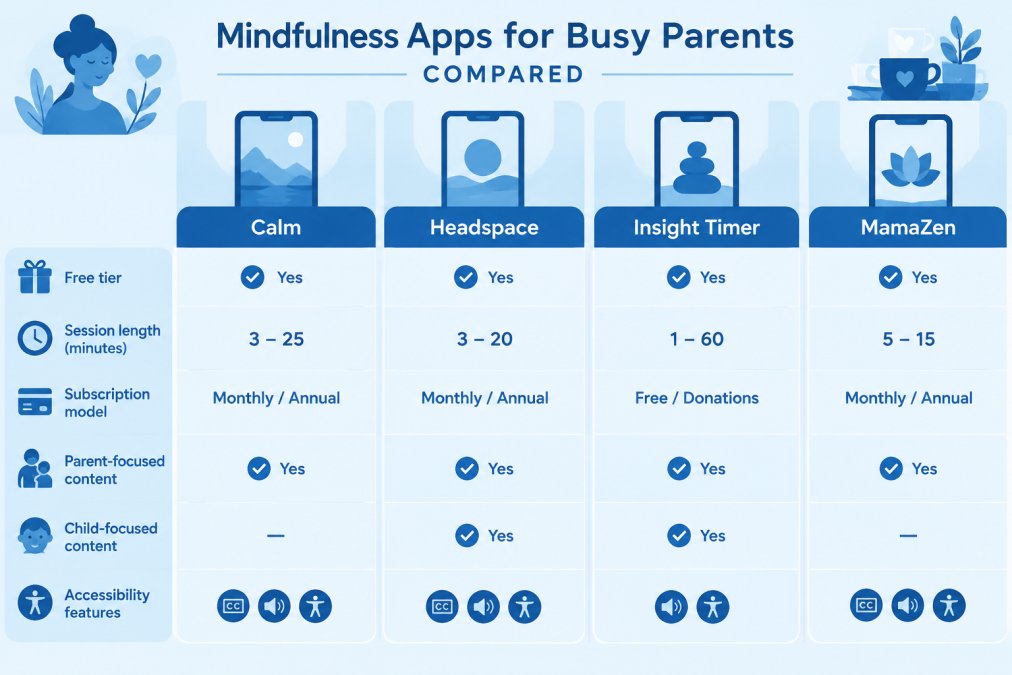
MamaZen and Parent-Focused Wellness Apps
One caution applies to every app here: none of them teach your child anything. They regulate the adult. That is valuable, but it is half the job. If your goal is helping children identify and understand feelings, pair an adult app with a child-facing resource rather than expecting one download to cover both.
Digital Journals and Kits That Replace Child-Focused Resources
Digital journals and guided kits fill the gap apps leave, because they work on paper or screen and involve the parent directly. This is where the best mindfulmazing alternatives for busy parents diverge most sharply: some replace the child-focused worksheet model, and some extend it. The comparison below lines up the actual alternatives on audience, format, time commitment, age suitability, and cost so you can match a tool to your real week.
Parent-Focused Journals vs. Child-Focused Kits
The core difference comes down to who does the work. A child-focused kit hands your kid a worksheet and hopes the lesson lands.
In practice, that distinction decides whether the habit sticks. Parents who buy a child's activity kit often find it collects dust because it requires adult setup and a willing child.
Use this side-by-side to compare the main alternatives to Mindfulmazing's child-focused kits. Pricing varies, so check the current price on the relevant website before you buy.
| Option | Audience | Format | Typical Time Commitment | Age Suitability | Standout Feature | Cost Signal |
|---|---|---|---|---|---|---|
| Mindfulmazing-style printable kits | Child, with adult setup | Printable worksheets and activities | 15-30 minutes plus printing | Roughly ages 4-12 | Structured emotional-literacy activities | Per-kit or bundle pricing; printer required |
| Parent-focused digital journal | Parent | Fillable PDF or printed pages | 5-10 minutes daily | Adult | Builds the parent's regulation first | One-time purchase, no subscription |
| Paired parent-and-teen journal set | Parent and teen | Two linked journals | 5-10 minutes each | Tweens and teens | Covers both sides of the household | Bundled one-time purchase |
| Free printable feelings charts | Child | Single-page printable | 2-5 minutes | Ages 3-10 | Zero cost, immediate use | Free |
| Family mindfulness card decks | Whole family | Physical cards | 2-10 minutes | Ages 4-adult | No screen, no prep | One-time purchase |
Our own approach is built around this idea. If you want a deeper look at the format, our digital journals for mental clarity guide walks through how to use one without adding pressure to your day.
Skip if: your children are under eight and need a purely play-based approach.
Watch out: a printable kit only works if your printer is loaded and your child is willing that day.
Mindful Parenting Techniques That Work in Under 10 Minutes
Mindful parenting techniques do not require a cushion, an app, or a quiet house. They require a pause you can take in the middle of real life. The techniques below take under ten minutes and most take under two.
Get the 3-step manifestation ebook now →
- The three-breath reset. Before responding to a demand or a slammed door, take three slow breaths and name what you feel. This is emotional awareness in its simplest form.
- One-sentence narration. Say out loud what you notice: "I'm frustrated and I'm still here." It models emotional regulation for your child in real time.
- The transition ritual. Pick one daily handoff, like the drive home, and use it to leave work mode. Same song, same breath, same sentence.
- Body scan at bedtime. Two minutes of noticing tension from jaw to shoulders.
- The repair sentence. When you lose your temper, say "That was my stress, not you." Repair builds more connection than perfection ever will.
What most guides miss is that these techniques work because they are small. A ten-minute practice you actually do beats a thirty-minute one you skip. For a structured short practice, our 10-minute habit reset guide lays out a full sequence.
Mindfulness Activities for Parents and Children to Do Together
Mindfulness activities for parents and children work best when they are shared and short. The goal is not a lesson; it is a moment of genuine presence you both remember.
Try these with school-age kids and teens:
- The five-senses check-in. Name one thing you each see, hear, feel, smell, and taste. It takes two minutes and pulls both of you into the present moment.
- Silent snack. Eat one piece of fruit together without talking, noticing texture and taste. This is mindful eating, and kids find it funnier than they expect.
- The gratitude round. Each person names one good thing from the day. Keep it to one, so it stays quick.
- A shared breath before dinner. One minute of breathing together before the first bite. It shifts the whole table's mood.
- The mood weather report. Each person describes their inner weather: sunny, cloudy, stormy. It builds emotional skills without an interrogation.
Teens resist anything that feels like a lecture, so keep the framing light and let them opt out without penalty. For age-specific ideas, our mindfulness activities for teen daughters guide has seven that teens actually tolerate.
Daily Habits for Intentional Parenting That Stick
Daily habits for intentional parenting succeed or fail on one variable: friction. A habit that needs equipment, an app, or thirty uninterrupted minutes will break within a week. A habit that needs a pen and ten minutes survives.
We group sticky habits into three types:
- Anchor habits. Attach a new practice to something you already do, like breathing before you open the car door.
- Micro-practices. Anything under two minutes, done daily. Small enough that skipping feels sillier than doing it.
- Shared rituals. One repeated activity with your child, same time each week, no phones.
The mistake most parents make is starting with the hardest habit first. Begin with the smallest version, protect it for two weeks, then add a second. A calmer environment is built from repetition, not intensity.
Watch out: if you stack three new habits in week one, you will likely drop all three by week three and conclude that mindfulness doesn't work for you. It does. The plan was just too big.
Choosing the Right Mindfulmazing Alternative for Your Family
Choosing among these best mindfulmazing alternatives for busy parents comes down to three questions: who needs the support, how much time you realistically have, and whether you want an app or something you hold.
Use this decision framework:
- If you need calm and have five minutes: a mindfulness app. Headspace for structure, Insight Timer for free access, Calm for sleep.
- If you are in early motherhood: a mom-focused app like MamaZen fits the stage.
- If you want a daily practice you can hold: a parent-focused journal beats an app, because it needs no screen or subscription.
- If your teenager needs support too: a paired set, one for you and one for her, does more than two separate apps.
- If your child is young and play-based: a child-focused kit still makes sense, as long as you accept the setup time.
There is no single winner here, and any guide that names one is selling something. Match the tool to your actual week, not the week you wish you had.
The real challenge isn't finding another app. It's building a practice small enough to survive a chaotic Tuesday. The 10-Minute Manifestation Journal for Busy Moms offers a bite-sized daily gratitude and visualization practice, and the Teen Girl Glow Up Journal supports your daughter's self-esteem and habits.
Frequently Asked Questions
What are the best Mindfulmazing alternatives for busy parents?
The best fit depends on whether you want an app, a journal, or a shared activity. For quick stress relief, mindfulness apps like Apps such as Calm, Headspace, and Insight Timer are one option for guided sessions. For a screen-free, 10-minute daily practice, a parent-focused digital journal works well. For mothers who want to support a teen daughter's self-esteem, the Teen Girl Glow Up Journal is a toolkit for adolescent girls focused on self-esteem and healthy habits.
Are there free alternatives to Mindfulmazing?
Yes. Some mindfulness apps, such as Insight Timer, offer free guided meditations, and others may offer limited free content; check each app's current offer. Free printable mindfulness materials are available online from various sources. If cost is the main concern, start with a free app tier and a printable breathing exercise, then upgrade only if you stick with the habit for a few weeks.
Are mindfulness apps actually helpful for busy parents?
They can be, especially for short practices that fit into a commute, a lunch break, or the minutes before school pickup. Mindfulness apps are often built around guided meditation and breathing exercises, which many people use for stress reduction. The key is choosing sessions of 5 to 10 minutes so the habit survives a hectic schedule. Apps do not replace professional mental health care.
How do I choose a mindfulness tool that fits my family's routine?
Start with time: if you have 10 minutes a day, a short guided meditation or a digital journal is realistic. If your goal is bonding with a teenager, pick a shared activity or a journal designed for teens. If you want to model calm for your children, a parent-focused app plus one family breathing exercise covers both. Match the tool to the outcome you want, not to the longest feature list.
What simple mindfulness activities can parents do with their children?
Try a three-breath reset before homework, a one-minute listening exercise where everyone names what they hear, or a gratitude round at dinner where each person shares one good thing from the day. These mindfulness activities for parents and children take under five minutes and need no supplies. Doing them at the same time each day turns them into a daily habit for intentional parenting.